How to scale a construction business past yourself
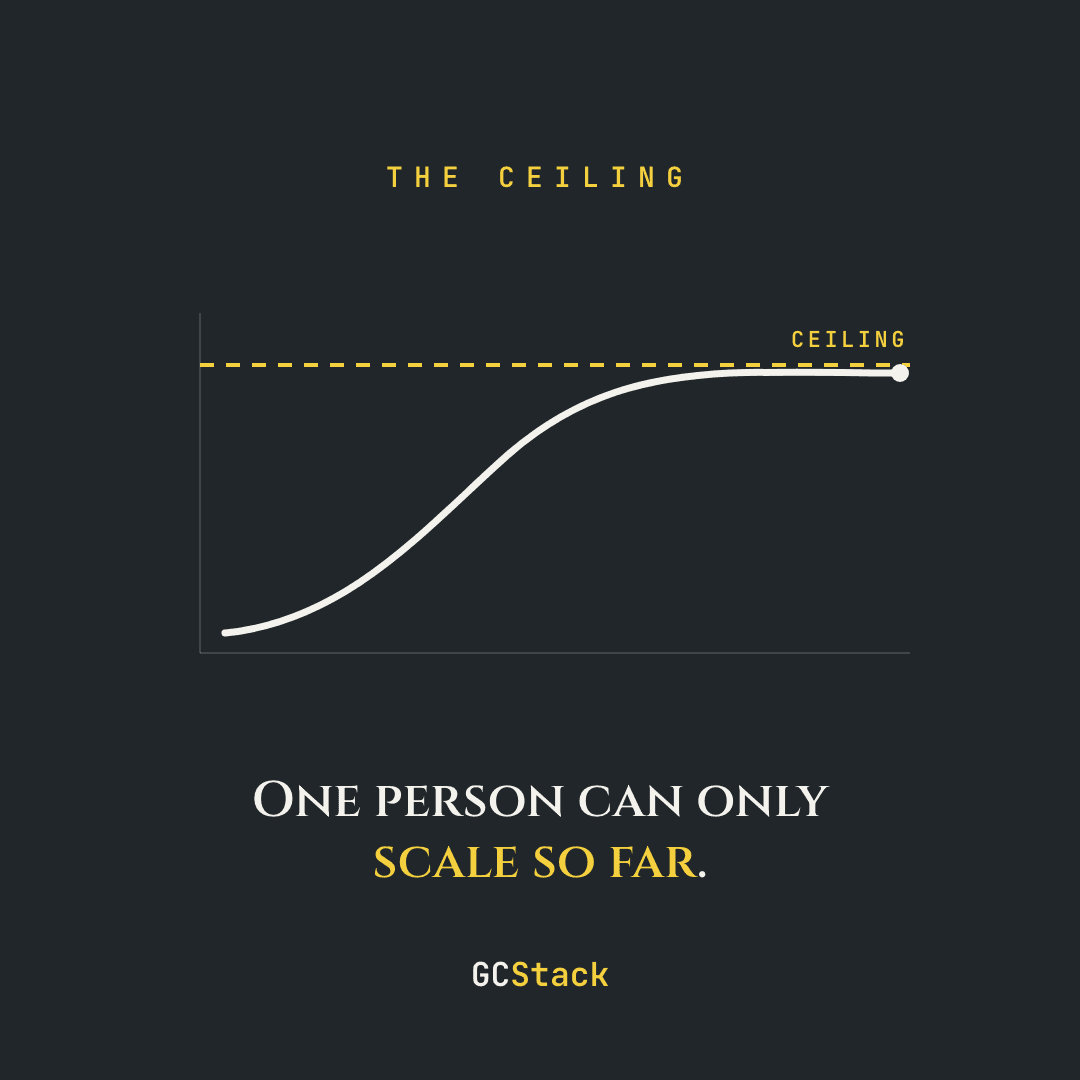
You scale a construction business past yourself by moving the business out of your head and onto a system — so that leads, proposals, scheduling, billing, and follow-up keep running whether or not you're personally thinking about them. The ceiling almost every builder hits isn't a limit on skill or effort. It's that a business run out of one person's memory, phone, and pile of text messages can only ever get as big as that one exhausted person.
The ceiling everyone hits
The pattern is always the same. You're good at the work, so you get more of it. More work means more estimating — at midnight, after the crew goes home. More invoices to chase, now on Sunday. More callbacks missed because you were on a roof when the phone rang. Quality starts to slip, stress climbs, and the idea of taking on more feels less like opportunity and more like the thing that finally breaks you.
It's your operating system, not your skill
That wall isn't telling you you've maxed out as a builder. It's telling you you've maxed out the current operating system — which is you, doing everything, holding it all in your head. No amount of skill fixes a structural limit. You can be the best builder in your county and still be capped by the fact that every decision, quote, and follow-up has to pass through one brain.
How builders break through
The builders who get past this don't work more hours — there aren't any more hours. They put the business on rails. Leads get captured and answered automatically. Proposals come from a repeatable process, not a blank page at midnight. Scheduling, billing, and follow-up run as systems that don't depend on you remembering. Same builder, same hands, same standards — a completely different machine underneath doing the parts that were never actually the craft.
Why this matters now
The market is rewarding builders who can scale to meet it. Demand is there; the winners will be the ones whose businesses can absorb it without collapsing on the owner. That's not about hustling harder than the next guy. It's about being the builder whose business can grow without requiring more of the one resource you can't manufacture — your own time.
Common questions
Why do so many good builders stay small?
Because they run the entire business out of their own head, phone, and memory. When you personally handle estimating, scheduling, billing, and follow-up on top of the building, the business can only grow to the size of one exhausted person. The limit is the operating system, not the builder's skill.
How do you grow a construction business without working more hours?
By putting the business on rails — systematizing lead capture, proposals, scheduling, billing, and follow-up so they run without depending on the owner's memory or free time. The builder and the craft stay the same; the machine underneath changes, which is what lets the business absorb more work without breaking.
Want this built for your business?
We run the marketing and the office for residential builders — and coach you on the content and tech — so you can stay in the field. Fifteen minutes to see if it fits.
Book a call →